
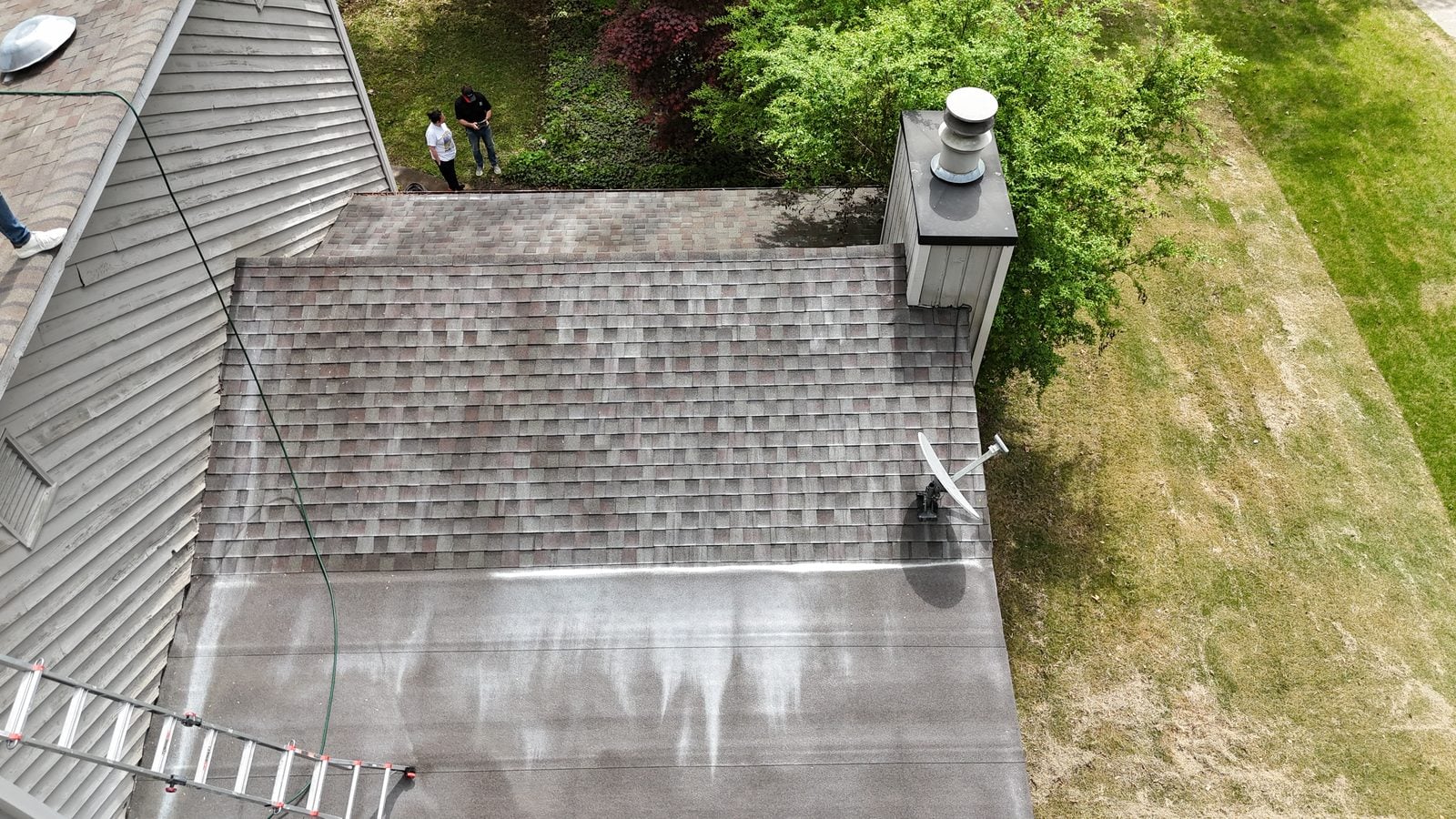
Intro:
Houston gets hit hard. Tropical storms. Hail. Straight-line winds. Even a regular summer thunderstorm can move fast enough to damage a roof if the conditions are right.
The tricky part is that roof damage isn’t always obvious. Sometimes the storm passes, everything looks fine from the driveway, and six months later you’re dealing with a leak that you can trace back to the damage you didn’t see at the time.
Here’s how to actually check your roof after a storm, what to watch for, and what to do if you spot something.
What to Look For From the Ground
Before anyone climbs on a ladder, do a walk around the property. You’re looking for:
Shingles in the yard. If you find pieces of shingle on the ground, you know you’ve got damage somewhere. Look at the edges. Are they clean breaks or ragged? Clean edges usually mean wind lift. Ragged means impact, probably from debris.
Granules in the gutters and downspouts. Shingles are coated in small mineral granules that protect them from UV and impact. After a hailstorm, granules often collect in gutters and along the ground where downspouts empty out. Some granule loss is normal over years. A sudden pile of granules after a specific storm means the shingles took a hit.
Dented gutters, downspouts, or fascia. Hail that dents metal is hail that dented your shingles. If you can see impact damage on soft metal components, assume the roof has it too.
Damaged siding, fences, or outdoor items. Same logic. If hail or wind damaged other things on your property, the roof took the same hits.
Water stains on ceilings or walls inside. This is a delayed signal. You might not see interior stains for days or weeks after a storm. New ones after recent weather point to roof damage somewhere above.
What You Can’t See From the Ground
This is where most homeowners get caught. A lot of serious storm damage doesn’t show up at all from down below. Things like:
Bruising from hail impact. Hail can hit a shingle hard enough to crack the mat underneath without visibly breaking the surface. Those spots fail within a year or two and start leaking.
Lifted or creased shingles from wind. Wind can lift a shingle enough to break the seal underneath without tearing it off. The shingle looks fine. It isn’t. The next storm gets underneath it and pulls it up.
Flashing damage around vents, chimneys, and skylights. Flashing is where most leaks start. Storm winds can bend flashing out of position without making it obvious from the ground.
Damage to vent boots. The rubber boots around plumbing vents are one of the most common leak sources in Houston roofs. Storms and extreme heat wear them out, and the damage is invisible unless you’re right on top of them.
What to Do After a Storm
A few practical steps that make a big difference:
Document everything. Take photos of your property, any visible damage, and the date. Check weather records so you have a documented storm date. This matters for insurance claims down the road.
Don’t climb the roof yourself. This isn’t lectures-about-ladder-safety territory. It’s practical advice. Storm-damaged roofs have weak spots you can’t see. Wet shingles are slippery. You can cause more damage walking around up there than you realize. Let a professional do it.
Get a real inspection. A good storm damage inspection goes beyond the visible stuff. The inspector should be on the roof, documenting with photos, checking flashing and vent boots, and giving you a clear read on what’s actually there.
Don’t sign anything with a door-knocker. After a bad storm in Houston, strangers will show up at your door offering free inspections and promising insurance will cover everything. Some are legitimate. Many aren’t. Never sign anything on the spot. Get multiple opinions. Check local reputation. Be especially cautious of anyone who pushes urgency.
What Insurance Does and Doesn’t Cover
Most homeowner’s insurance policies cover sudden storm damage. They do not cover:
- Age-related wear or deterioration
- Damage from poor maintenance
- Damage from improper installation
- Pre-existing conditions that weren’t storm-related
That means the documentation matters. Clear photos of the damage, a storm event date that matches the damage, and a professional condition report all strengthen a legitimate claim. Vague claims without documentation often get denied.
If you file a claim, work with a roofer who handles the insurance side professionally. That doesn’t mean a roofer who inflates claims or promises you a new roof. It means one who documents thoroughly, communicates clearly with your adjuster when helpful, and respects the boundaries of what insurance actually covers.
A lot of storm damage is invisible from the ground. The only way to know for sure what happened to your roof is to get someone up there to check. The inspection is free. The peace of mind is real. And if there’s damage, catching it early is always cheaper than waiting for a leak to show up.